I'm a software and machine-learning engineer. I build AI systems and the software around them, from full-stack web apps to developer tools. I care about shipping work that people actually use.
University of Southern Mississippi
Aug 2023 – May 2027B.S. in Computer Science
GPA 4.0 / 4.0 · Keystone Honors Scholar · full-tuition merit scholarship
Web & AI DeveloperCurrent
2026 – PresentCenter for Entrepreneurship, University of Southern Mississippi · Hattiesburg, MS
Build and maintain the Center's web platforms and internal tools, and develop and manage AI-agent workflows that support its entrepreneurship programs.
Undergraduate Research AssistantCurrent
Aug 2025 – PresentMa Research Lab, University of Southern Mississippi · Hattiesburg, MS
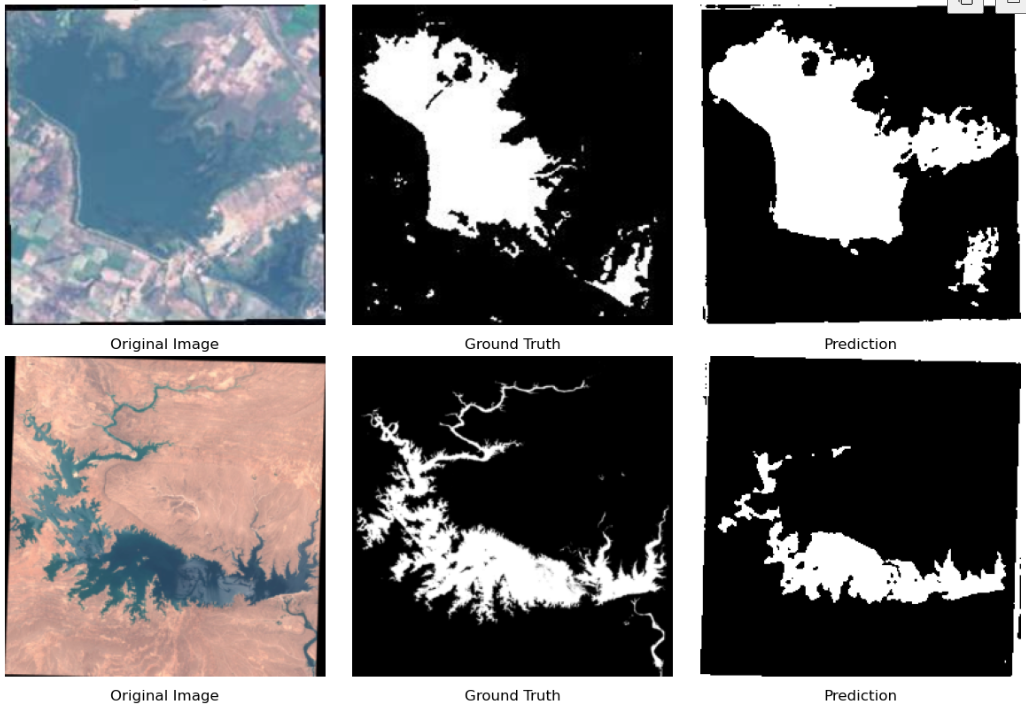
Building ML pipelines to automatically characterize and speed up Atomic Force Microscopy imaging of block copolymers.
- Trained a custom U-Net to segment nanoscale features in AFM images, a 35% improvement over conventional image analysis
- Benchmarked CNN, transformer, and GAN super-resolution models to cut AFM scan time by up to 3.7x (manuscript in preparation)
Web Developer
Nov 2024 – Jan 2025BIONET Project (Euro-African Biomonitoring Network)
Built and deployed a TYPO3 website for a network assessing environmental exposure in populations.
- Developed the CMS-driven site and deployed it on Azure with Apache and MySQL
Undergraduate Research Assistant
May 2025 – Aug 2025Cyber Innovations Lab, University of Southern Mississippi · Hattiesburg, MS
Built ML and deep-learning pipelines for AES-128 key recovery via electromagnetic side-channel analysis on the ASCAD dataset.
- Trained and benchmarked CNN, ResNet, SVM, and feature-selected Random Forest classifiers against EM traces, reaching Rank-0 key recovery
- Work published at the 34th SEDE Conference (AI Track), 2025 (Springer CCIS)
Co-founder & Web Lead
2025 – PresentQuantum Undergraduate Network
Co-founded a global community that helps undergraduates get into quantum information science, and solo-built its web platform.
- Designed, built, and deployed the full React and Next.js platform on Vercel for talks, resources, and networking
Technical Infrastructure Lead
2024 – PresentNepal Health Frontiers
Lead the technical infrastructure and digital presence of a healthcare NGO working on non-communicable diseases, mental health, and healthy-lungs campaigns.
- Maintain the website and email systems and publish the monthly research roundup
BenefitFlow
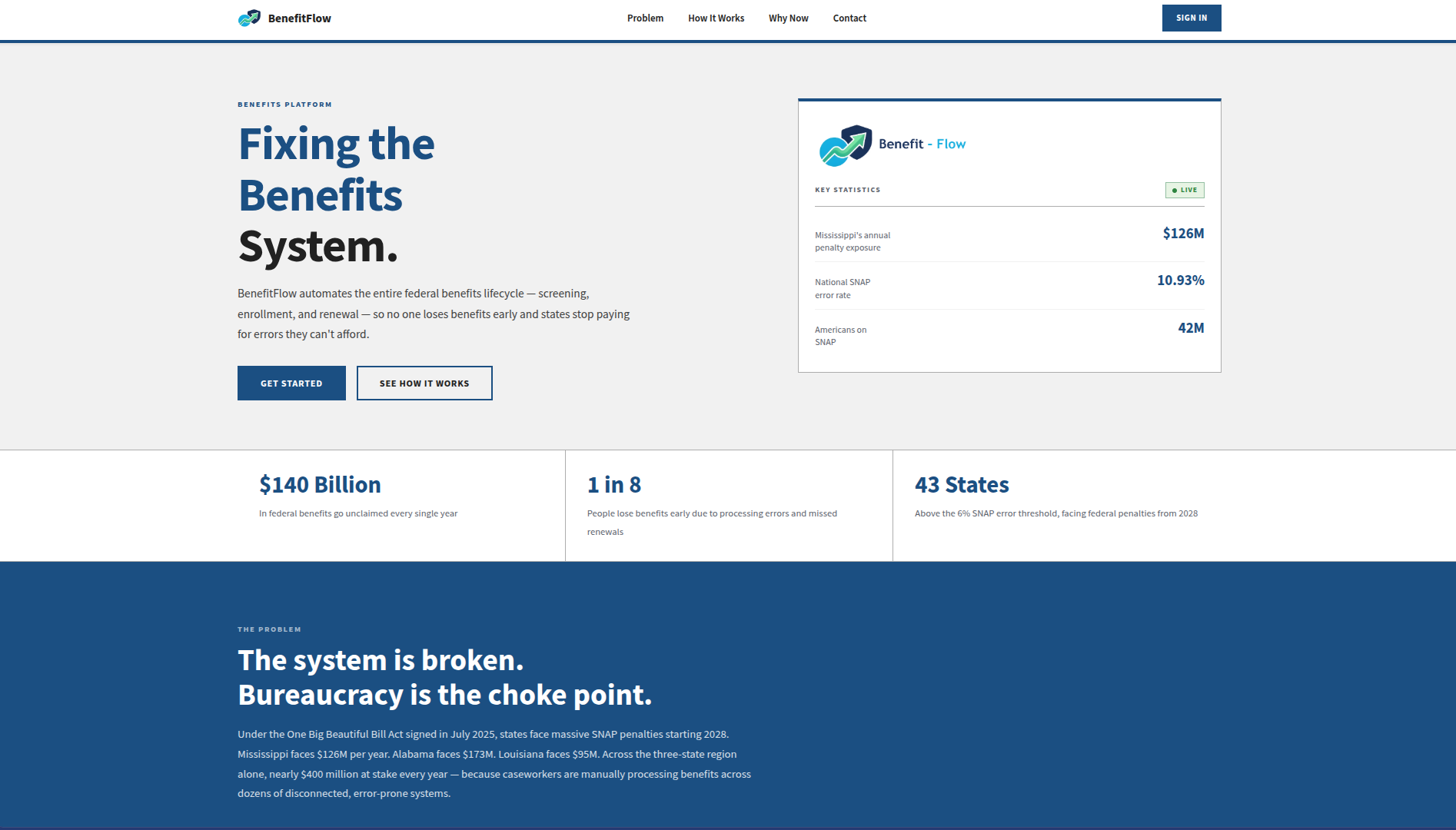
Next.js · TypeScript · Machine Learning · HIPAAA platform that automates the federal benefits lifecycle, screening, enrollment, and renewal, so people don't lose SNAP, Medicaid, and Medicare to processing errors and missed deadlines, and states cut the error rates that trigger federal penalties. A startup I co-founded; winner of USM's Golden Idea Pitch and Checkpoint programs.
whatisit
Python · PyTorch · LoRA · GGUFAn efficient natural-language-to-shell model that runs entirely on CPU. I fine-tuned and 4-bit quantized Qwen2.5-Coder-1.5B (LoRA, GGUF Q4_K_M) into a 941 MB model with roughly 1-second latency. It scores 0.620 on the 300-task InterCode-ALFA execution benchmark, a statistically significant lift over the untuned baseline and on par with an untuned 7B model.
photo-particles
JavaScript · Canvas · Physics · esbuildA published JavaScript library that turns any image into an interactive, physics-driven particle cloud. Zero dependencies and plug-and-play. It powers the photo on this site's home page.
whatwasit
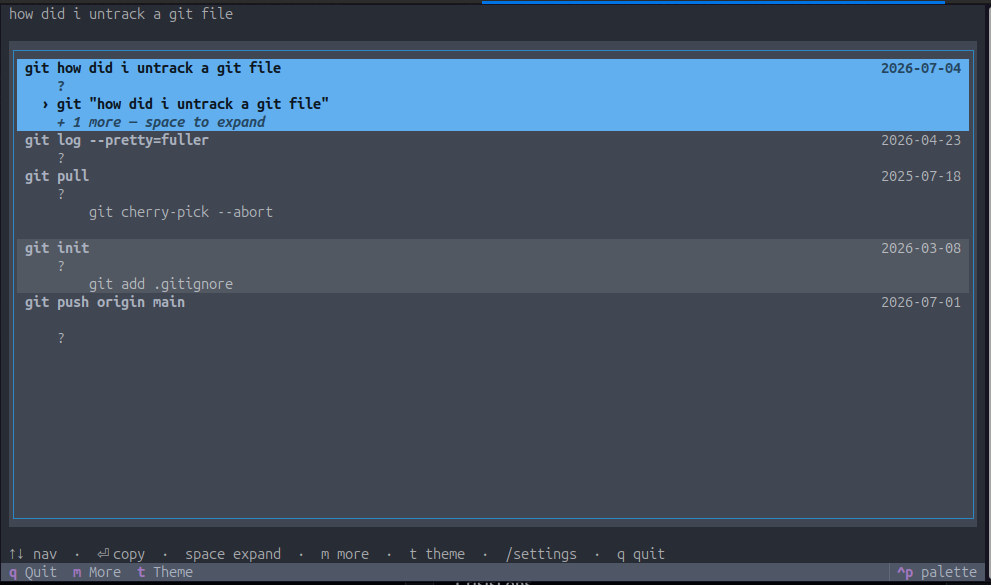
Python · ONNX · Embeddings · SQLite FTS5Local-first semantic search for your shell history. It finds commands by what you were trying to do rather than the exact text you typed, using ONNX embeddings alongside FTS5 keyword search, an interactive TUI, and fully offline inference. Published on PyPI.
ML-Based AES Key Recovery via Side-Channel Analysis
Python · PyTorch · Scikit-learn · CNN / ResNetMachine-learning and deep-learning models (Random Forest, SVM, CNN, ResNet) that recover AES-128 keys from electromagnetic side-channel traces on the ASCAD dataset, reaching Rank-0 recovery. Published at the 34th SEDE Conference (AI Track), 2025.
Sediment Estimation for Flood-Risk Modeling, Koshi Basin
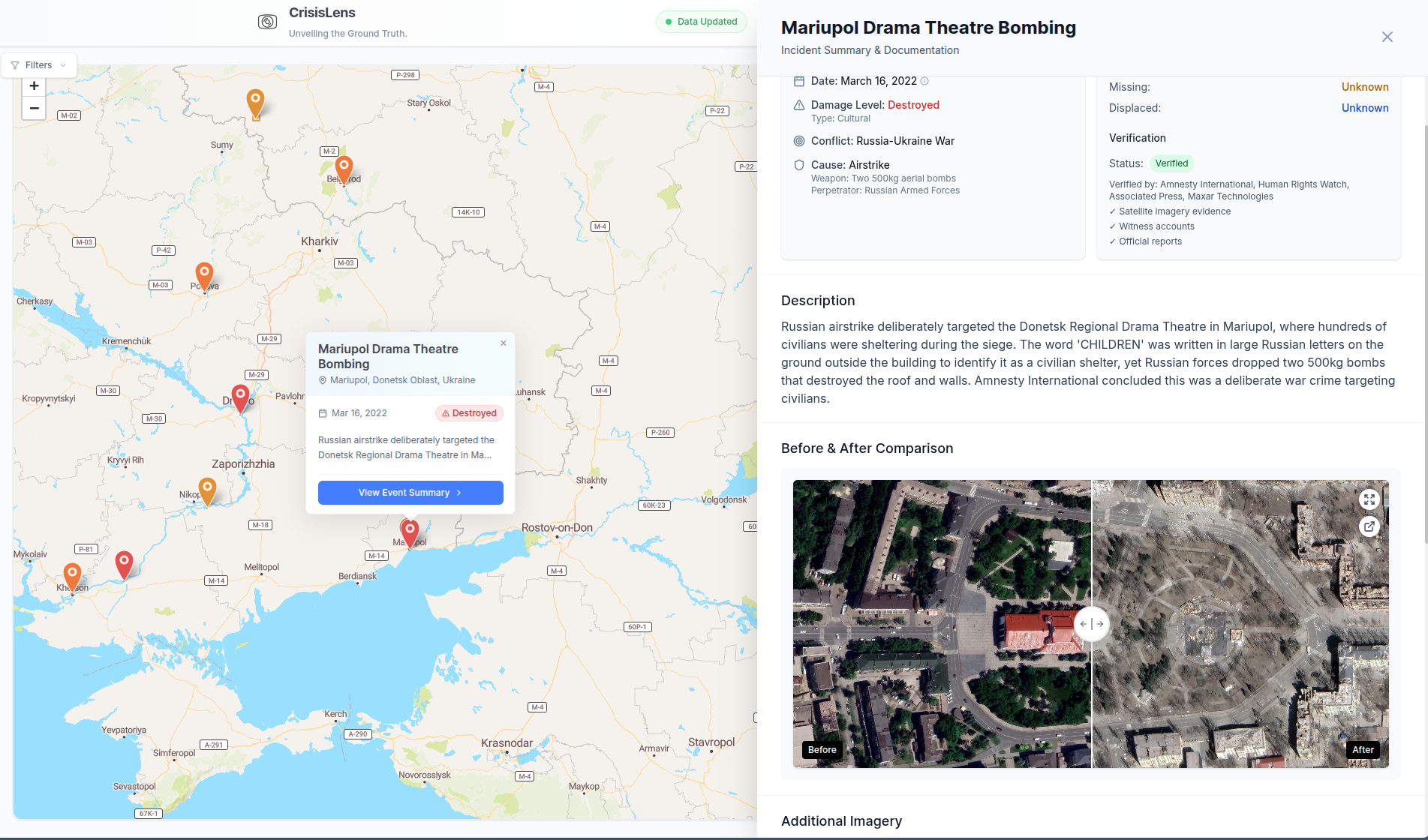
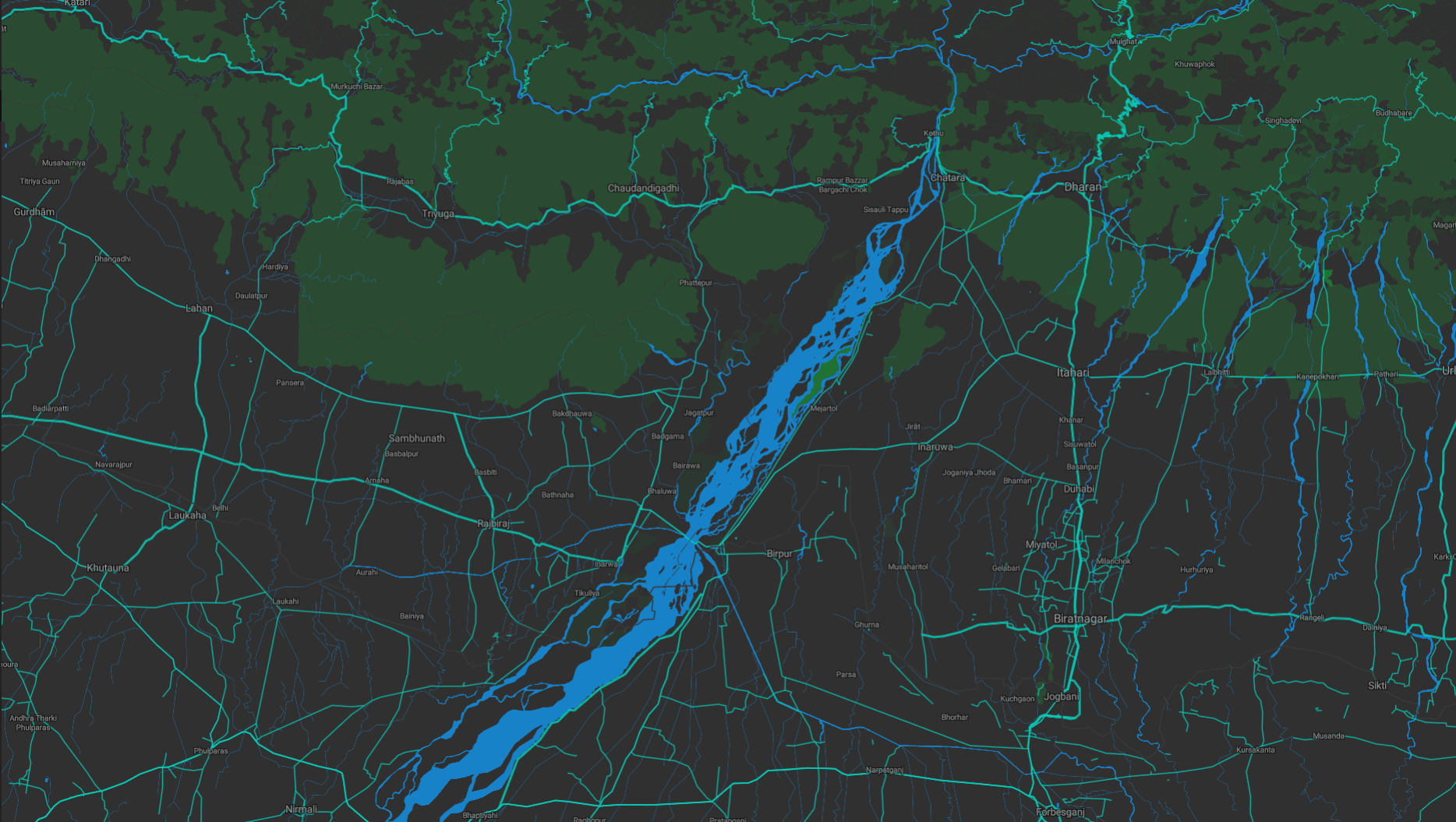
Python · Google Earth Engine · Sentinel-2 · Scikit-learnA machine-learning pipeline that estimates suspended sediment concentration from Sentinel-2 imagery to improve flood-risk models for the Koshi River Basin. Funded by an Eagle SPUR grant and presented at MidSouth ASPRS 2026.
PublishedM. Poudel and N. Rahimi, “Machine Learning-Based AES Key Recovery via Side-Channel Analysis on the ASCAD Dataset,” 34th Software and Data Engineering (SEDE) Conference, AI Track, 2025. Springer CCIS, vol. 2720, pp. 334-352.
In preparationSuper-resolution and segmentation for accelerated Atomic Force Microscopy of block copolymers (Ma Lab, University of Southern Mississippi).


 Startup · Co-Founder